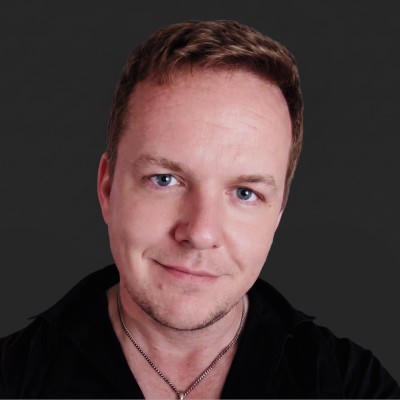
Hi, I'm Brian.
I'm the developer behind codeBetter and Learn to Write Code -- here's why this channel exists and who it's for.
Why I started codeBetter
I'm Brian Kittrell, and codeBetter is about helping you become a better programmer, software engineer, and systems thinker -- whether you're brand new to coding or trying to level up your existing skills.
I bring a real-world perspective from nearly 20 years of coding experience: professional systems architecture work, legacy code debugging, software design, mentoring, and process improvement. Learn to Write Code takes that same concept-first, pseudocode-first approach and turns it into a curriculum you can work through at your own pace.
The credentials, if you're wondering
I don't lead with this on camera, but it's here if you want the receipts.
Education
M.S. in Computer Science, Artificial Intelligence specialization, from Georgia Institute of Technology. B.S. in Computer Science, plus Associate degrees in Software Engineering Technology and Computer Programming Technology. Graduated Summa Cum Laude and Magna Cum Laude, made President's List every eligible term, and was named an All-Mississippi Academic Team Scholar.
Professional work
My day-to-day title is Software Systems Architect: I design secure, scalable systems for sensitive data and mission-critical operations, architect AI programs end-to-end (use-case discovery through deployment), and build governance and privacy safeguards into production systems from the ground up rather than bolting them on after. I've also served as a Graduate Assistant, researching generative AI and academic integrity.
Before "software" was the title, I spent roughly 15 years in public-safety communications as a 911 dispatcher and trainer, and six years as a volunteer firefighter and Emergency Medical Responder -- four of them as department president. That background is a big part of why I care about writing code that behaves correctly when it actually matters.
Research & writing
I've published peer-reviewed whitepapers on AI privacy/security and creative-industry service models, and I'm an ORCiD-registered research contributor. I'm also a bestselling author -- seven published novels, 500,000+ copies in distribution across nonfiction and speculative fiction. Full catalog on Amazon.
Music
On the creative side, I write, produce, and perform my own music as an independent artist. Albums and singles distributed globally, 60,000+ streams, and a Top 100 Rising Stars nod from TuneCore. I'm a member of ASCAP. Listen on Spotify or Apple Music.
Affiliations & certifications
Member of the Association of Information Technology Professionals, an InfraGard partner, and a Phi Theta Kappa honoree. I hold DHS/FEMA incident-management certifications and a CITI human-subjects research certification.
Long story short: whether it's software architecture, AI governance, teaching, writing, or music, I build things and I finish them. Full history's on LinkedIn if you want it.
The school and the workshop
Learn to Write Code is the school -- it teaches an idea in plain English, writes it in pseudocode, then shows the same logic in real languages. Coders Rock is the workshop next door: free, browser-based practice challenges in pseudocode, Python, and JavaScript, with no account, no streaks, and no leaderboard to keep you around longer than you need. Finish a lesson here, then go run the idea yourself over there.
The welcome video
How these lessons are put together
This is the channel-intro video that walks through how the tutorial interface itself works -- the code window, memory view, line highlighting, and step-by-step walkthroughs -- before Lesson 02 gets into pseudocode.
Concept first
Students should understand what a variable, loop, condition, function, or object is before punctuation and language rules become the focus.
Pseudocode second
Pseudocode separates problem solving from syntax. The standard uses consistent English-like terms such as CREATE, CHANGE, SHOW, IF, REPEAT, ACTION, and BLUEPRINT.
Languages third
The same example is then shown in multiple languages so differences in syntax become visible without changing the underlying problem.